
Old gold coins carry more than metal. Each one is a small piece of history, and some survived one of the strangest moments in American financial history: the 1933 gold recall. If a relative left you a drawer of old gold coins, or you are sorting through an estate right now, knowing that story can help you see why these coins may be worth more than the gold inside them.
The Day Owning Gold Became Illegal
On April 5, 1933, with the Great Depression crushing the country and banks failing, President Franklin D. Roosevelt signed Executive Order 6102. As this history of the gold recall explains, it required Americans to hand over gold coins, gold bullion and gold certificates to the Federal Reserve in exchange for $20.67 per troy ounce. The deadline was May 1, 1933, and violators faced a fine of up to $10,000, up to ten years in prison, or both.
The order was not a blanket ban on every coin. It let each person keep up to $100 in gold coins, and it exempted gold coins with a recognized special value to collectors. That exception is a big reason so many vintage gold coins survived in family collections, safe deposit boxes and dresser drawers. In 1934 the Gold Reserve Act raised the official price of gold to $35 an ounce, and Americans were not allowed to own gold bullion freely again until 1974.
The Coins That Were Never Supposed to Exist
The story gets stranger. The Philadelphia Mint had already struck 445,500 Saint-Gaudens Double Eagles dated 1933, but because of the order they were never released, and nearly all were melted into bars. A handful escaped. In June 2021, the one 1933 Double Eagle the government allows a private citizen to own sold at Sotheby’s for $18.9 million, the highest price ever paid for a coin. Other coins shaped by the recall became rarities too. A 1927-D Double Eagle brought $4.44 million at a Heritage auction in August 2022.
Those are extreme cases, and most antique gold coins are not million-dollar rarities. But they show how date, mint mark and condition can turn a $20 face-value coin into something collectors fight over.
What Are Old Gold Coins Worth Today?
Start with the metal. Gold was trading at roughly $4,180 per ounce at the start of October 2026. A $20 Double Eagle holds just under one troy ounce of pure gold (about 0.9675 ounce), so the gold alone is worth around $4,000 at that price. A $10 Eagle contains about half an ounce, or roughly $2,000, and a $5 Half Eagle about a quarter ounce, or roughly $1,000.
Think of that figure as the floor, not the ceiling. Collectors often pay a premium over melt value for scarce dates, mint marks such as D for Denver or S for San Francisco, and coins in strong condition. A common-date coin may sell for a modest premium above its gold content, while a scarce date can bring several times more. Gold prices move daily, so any number you see today is only a snapshot.
Old Gold Coins Burbank Families Often Find
When families bring in a parent’s collection, these are some of the pieces that turn up most often:
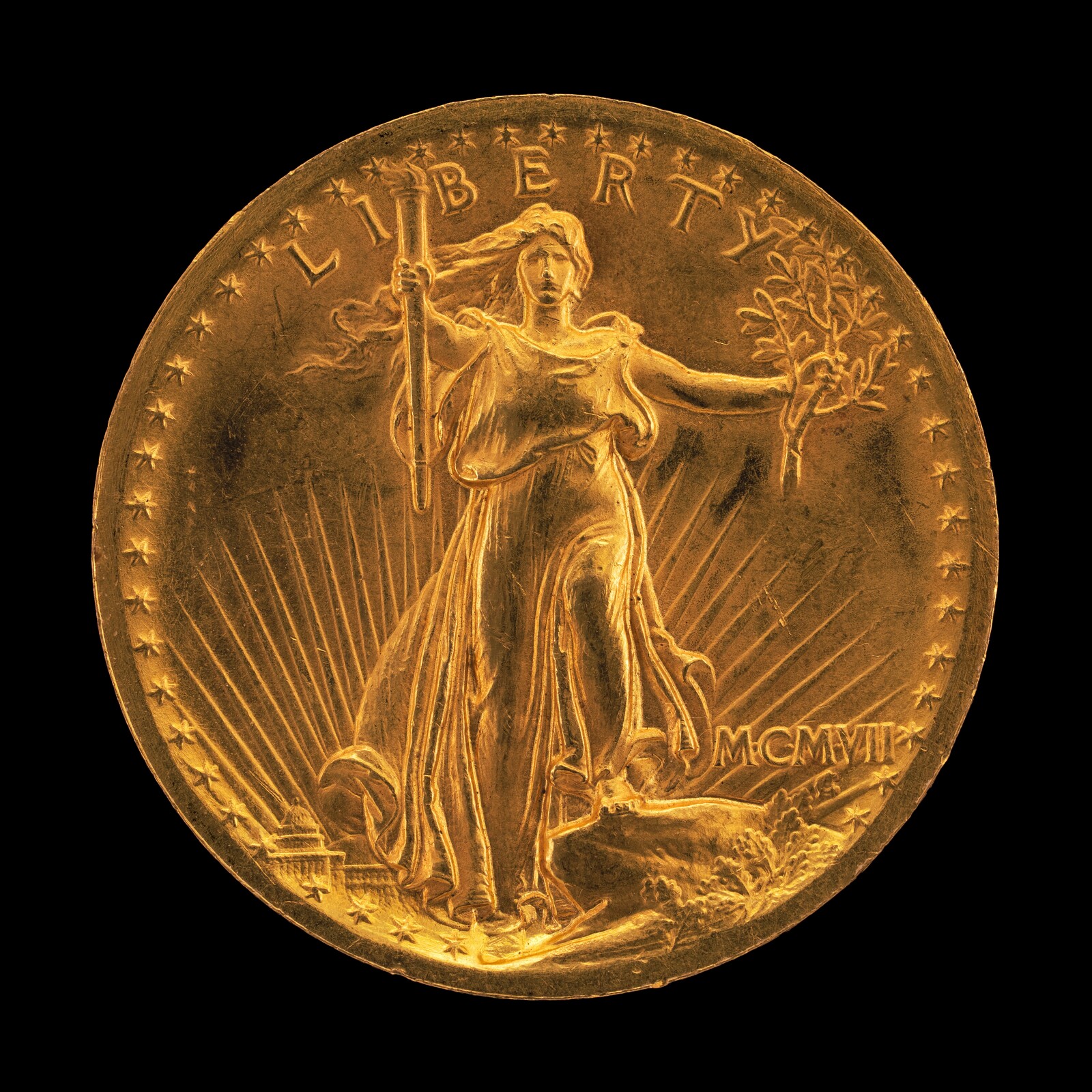
- Saint-Gaudens Double Eagle ($20, 1907–1933): often called the most beautiful American coin, with Lady Liberty striding forward with a torch.
- Liberty Head Double Eagle ($20, before 1907): the older design that preceded it.
- Indian Head Eagles and Half Eagles ($10 and $5): early 1900s pieces with a distinctive design.
- Foreign gold: British sovereigns, Mexican 50 pesos and other gold coins brought home by travelers or relatives.
If you are not sure what you have, that is normal. Identifying the date, mint mark and condition is exactly what a dealer does.
Watch: The Story of the 1933 Double Eagle
This short video tells the story of the 1933 Double Eagle and how a $20 gold piece became the most valuable coin ever sold at auction.
How to Handle Inherited Gold Coins Before You Sell
If you are settling an estate or planning an estate sale, a few simple habits protect value. Never clean a coin, because polishing can scratch the surface and reduce what a collector will pay. Hold coins by the edges, keep them in soft pouches or the holders they came in, and keep any paperwork or notes the owner left behind. Then gather everything in one place, including fine jewelry, silver and any other precious metals, so one visit can sort out what is scrap and what is collectible.
This article is general information, not legal or financial advice. If you ever suspect you hold something unusual, such as a 1933-dated Double Eagle, get qualified guidance before doing anything else, because the rules around those coins are unique.
Why Choose a Burbank Coin Dealer Over a Pawn Shop
If you have typed “pawn shop near me” into your phone while wondering what to do with a box of old coins, it helps to know the difference. A pawn shop runs on loans and general merchandise, so coins are one line among many. Paul Albanian and Associates LLC is a dedicated precious metal dealer in Burbank that has served the San Fernando Valley for more than 30 years. As both a gold dealer and a coin dealer in Burbank, the team buys gold, silver, platinum, coins and jewelry from individuals and families every day, so you get a straight answer about what you have.
Old gold coins have survived depressions, recalls and decades in dresser drawers, and yours may be worth more than you expect. Bring in a single coin or an entire inherited collection, and Paul Albanian and Associates LLC will give you an honest, no-obligation look.